The difference between I-beam and H-beam
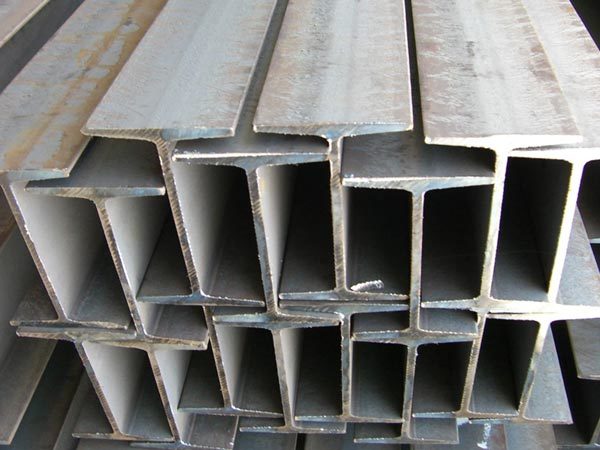
The upper and lower flanges of H-beams are usually wider than those of I-beams. H-beams also perform better in terms of load-bearing capacity and stability, and their bending resistance is particularly good. Therefore, H-beams are more suitable for structures that need to withstand large loads, such as bridges and high-rise buildings.
The differences between I-beam and H-beam mainly include properties, classification, application areas, characteristics and processes:
Properties: I-beam is a type of steel with an "I"-shaped cross-section, while the cross-section of H-beam is the same as the English letter "H", which is a more optimized economical steel.
Classification: I-beams are mainly divided into three categories: ordinary, wide flange and light, while H-beams are mainly divided into large, medium and small sizes according to size.
Field of use: I-beams are widely used in various building structures, bridges, brackets and machinery, while H-beams are more commonly used in industrial and civil building structures, underground engineering and highway baffle brackets.
Characteristics: The inner and outer edges of the flanges of H-beams have no slope and are straight, which makes welding and splicing operations relatively simple, and can effectively save materials and construction time. The cross-section of I-beams is good at straight pressure and tensile resistance, but due to the narrow wing plate, its torsion resistance is poor.
Process: H-beams can not only be hot-rolled but also welded, while I-beams can generally only be hot-rolled.
In addition, from the appearance point of view, the upper and lower flange plates of H-beams are usually wider than those of I-beams. In terms of load-bearing capacity and stability, H-shaped steel also performs better, and its bending resistance is particularly good. Therefore, H-shaped steel is more suitable for structures that need to bear large loads, such as bridges and high-rise buildings.
Ironex Quality Commitment
All steel materials are supplied with authoritative Mill Test Certificates (EN 10204 3.1 / 3.2), full ultrasonic inspection (UT), third-party SGS/BV inspection support, and specialized maritime export packaging.
Need Exact Technical Specs or Fast Pricing?
Contact our metallurgical engineering team for custom thickness, tolerance control, and sea-freight packaging solutions.