The difference between steel bars and round steel
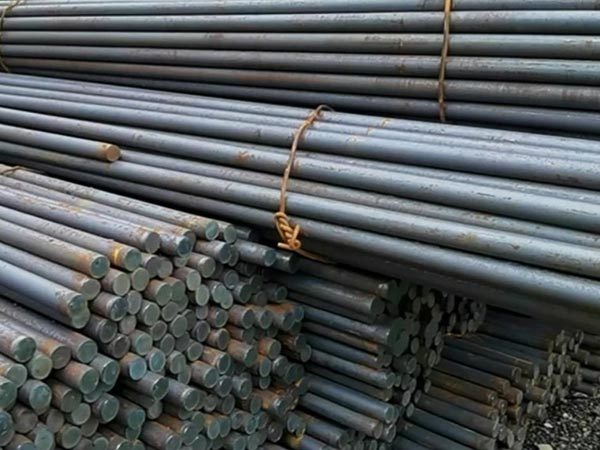
Although round steel and round steel bars are both solid long strips of steel with a circular cross-section, there are significant differences in shape, size, use, material, processing method and heat treatment.
There are obvious differences between steel bars and round bars in shape, size, purpose, material and processing methods.
Shape and size: Round steel refers to a solid long steel strip with a circular cross section. Its diameter can range from small to large, and its length is generally between 6-12 meters. Round steel bars are also solid long steel strips with a circular cross section, but with a larger diameter and a shorter length, usually between a few hundred millimeters and a few meters. The diameter range of round steel is generally between 10-300 mm, while the diameter of round steel bars is generally between 5-200 mm.
Uses: Round steel is usually used to manufacture various finished profiles, such as steel pipes, steel bars, square tubes, channels, and special-shaped profiles. It is a common construction steel. Round steel bars are usually used in mechanical processing and manufacturing, such as shafts, pins, bolts, etc. for bridges, houses, vehicles, etc., and are a high-precision and high-demand mechanical processing material.
Material: Although they are all steel, the material of round steel is usually plain carbon steel, low carbon steel, etc., and the cost is relatively low. The material of round steel bars is usually high-strength materials such as carbon steel, high carbon steel, alloy steel, and stainless steel.
Processing method: Round steel can be processed by hot rolling, cold drawing, forging and other processes, and has good toughness and plasticity. Round steel bars usually require precision cutting, grinding and other processing procedures.
Heat treatment: Ordinary round steel has poor metal fatigue resistance, low hardness and poor wear resistance. Heat-treated steel bars, such as quenched and tempered heat-treated steel bars, will undergo a drop test to simulate the height of the rod mill for 15,000-20,000 times to ensure their performance. The surface hardness of heat-treated steel bars is higher, with an HRC value of between 45 and 60, while the surface hardness of ordinary round steel is around 20.
In summary, although round steel and round steel bars are both solid long strips of steel with a circular cross-section, there are significant differences in shape, size, use, material, processing method and heat treatment.
Ironex Quality Commitment
All steel materials are supplied with authoritative Mill Test Certificates (EN 10204 3.1 / 3.2), full ultrasonic inspection (UT), third-party SGS/BV inspection support, and specialized maritime export packaging.
Need Exact Technical Specs or Fast Pricing?
Contact our metallurgical engineering team for custom thickness, tolerance control, and sea-freight packaging solutions.