
H-Beam vs. I-Beam: What's the Difference? (Structural Shapes, Load Capacity & Selection Guide)
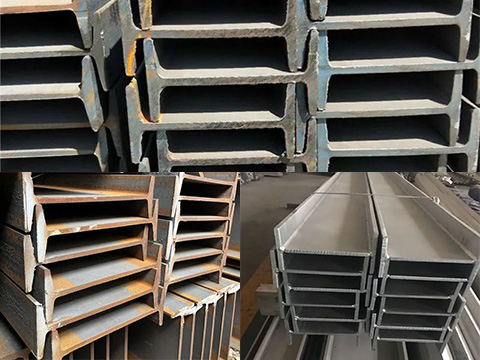
Wide Flange (H-Beam) vs. Narrow Tapered Flange (I-Beam): Which Profile Fits Your Design?
H-beams feature equal-thickness parallel wide flanges suited for bidirectional bending and vertical columns. I-beams feature tapered inner flanges optimized for unidirectional bending in beams and secondary roof structures at reduced material cost.
H-beam and I-beam (universal beam) are the two most common categories of structural steel sections evaluated by structural engineers, EPC contractors, and procurement managers. Although both profiles may appear analogous at first glance, fundamental differences in cross-sectional geometry, flange inclination, mechanical load axes, fabrication techniques, and cost efficiency dictate their exact roles on the job site.
1. Section Shape: The Fundamental Geometry Difference
The geometric silhouette defines the fundamental operational variance between an H-beam and an I-beam. When inspecting structural steel profiles end-on, the differences in flange taper, flange thickness, and aspect ratios become immediately apparent:
H-Beam (Wide Flange Profile)
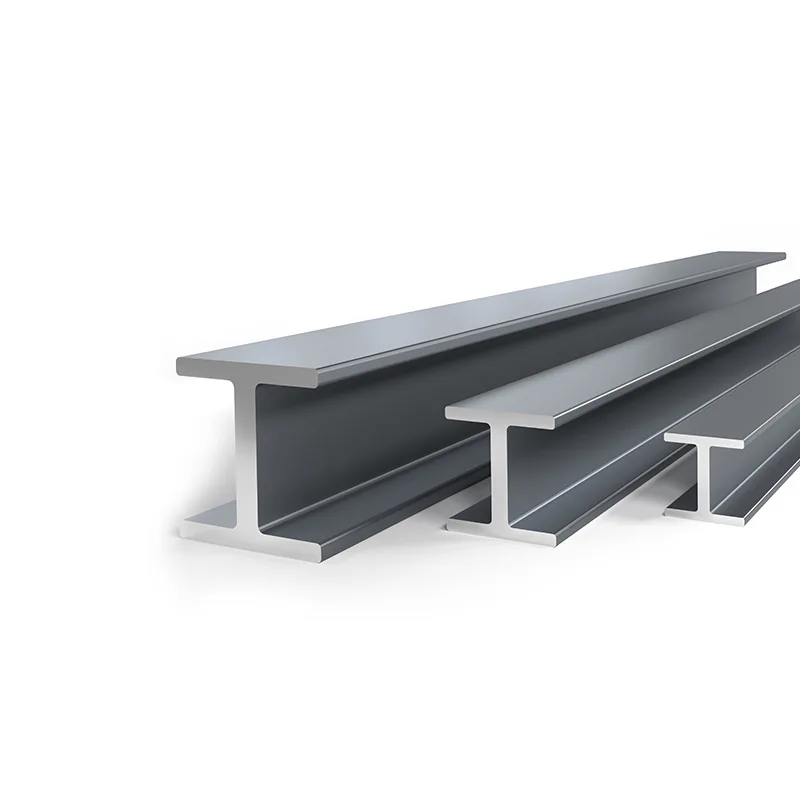
The cross-section of an H-beam resembles the capital letter "H". It possesses wide, thick flanges with completely parallel inner and outer surfaces. The ratio between flange width and total section height is often close to 1:1, producing a square-like bounding box that provides superior balance against multi-directional stress.
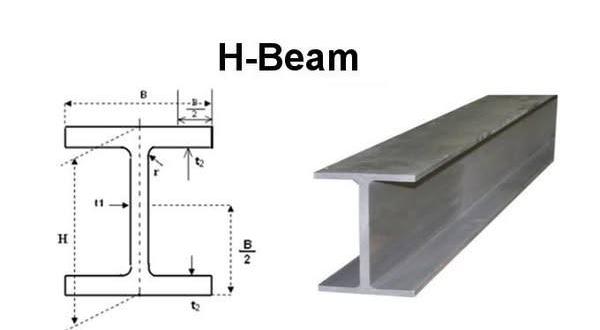
Figure 1: H-Beam schematic illustrating equal-thickness parallel flanges
I-Beam (Universal / Standard Profile)
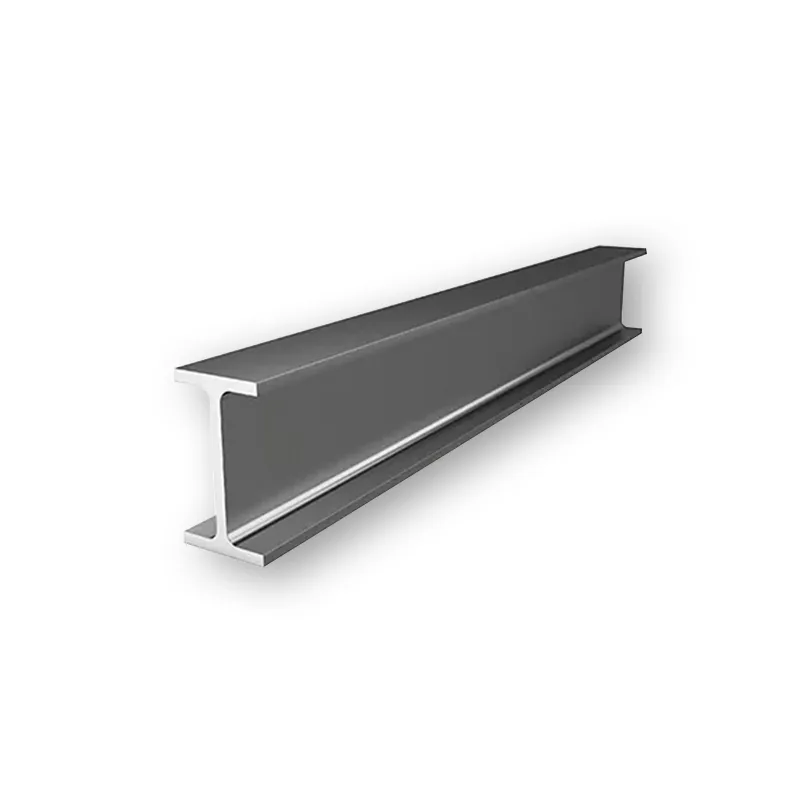
The cross-section of an I-beam resembles the letter "I". Its flanges are narrower, and the inside surfaces of the flanges feature an internal slope (typically ranging from 1:6 to 1:10 or roughly 9% to 16%). This produces flanges that are noticeably thicker near the root fillet and thinner toward the outer tips.
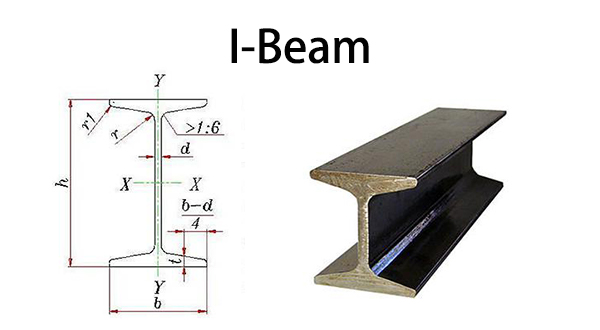
Figure 2: I-Beam schematic showing internal flange bevel and deep vertical web
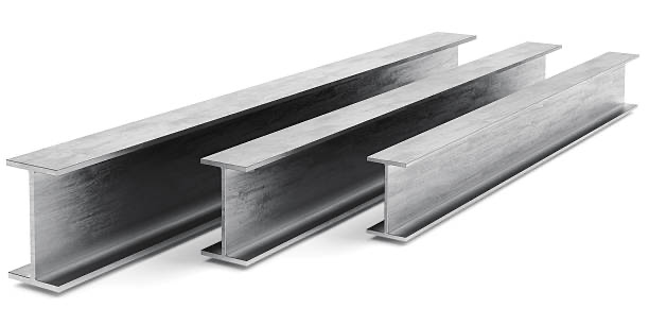
Figure 3: Side-by-side geometric contrast: H-Beam (uniform parallel flanges) vs. I-Beam (tapered flange tips)
In summary: H-beams are characterized by "wide flanges and equal thickness", whereas I-beams are characterized by "narrow flanges with internal taper". This fundamental geometric difference is the root cause of every disparity in their respective mechanical capacities.
2. Comparison of Mechanical & Structural Performance
How do these geometric distinctions translate into real-world structural integrity? Engineers evaluate four core mechanical characteristics:
1. Flexural & Bearing Capacity
Because an H-beam places more steel material into wide, thick outer flanges located far from the neutral axis, its second moment of area (moment of inertia) is substantially higher. Under identical steel weight per meter, an H-beam delivers approximately 5% to 10% greater bending resistance.
2. Load Direction & Biaxial Stress
An I-beam has a large moment of inertia along its vertical axis (Ix) but very minimal resistance along its minor horizontal axis (Iy). Consequently, I-beams cannot support transverse loads or heavy axial compression without bracing. H-beams possess strong moments of inertia on both axes, making them capable of handling complex bidirectional bending and column compression.
3. Torsional Rigidity
Narrow flanges lack resistance to twisting moments. When an I-beam experiences eccentric forces or lateral wind shears, it twists easily. H-beam sections provide high torsional rigidity, crucial for bridge superstructures and heavy crane support systems.
4. Lateral Stiffness & Buckling Resistance
Under heavy downward bending loads, beam compression flanges tend to buckle laterally (lateral-torsional buckling or LTB). The broad base of H-beam flanges resists lateral deflection, whereas I-beams require continuous lateral bracing (such as concrete slabs or cross-bridging).
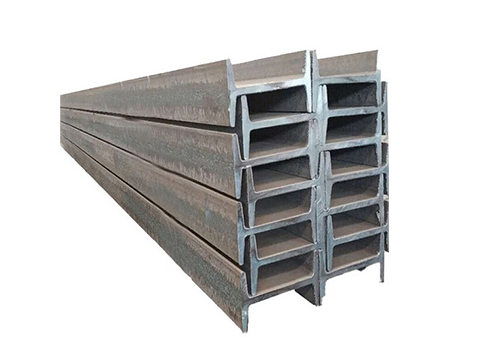
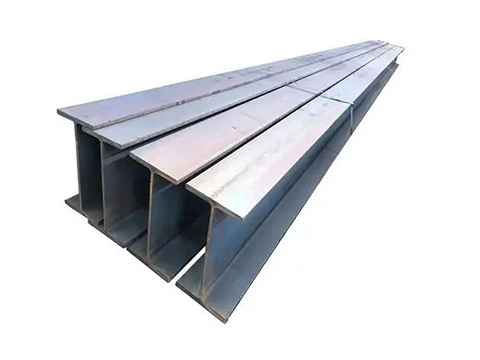
3. Differences in Production Processes: Hot-Rolled vs. Welded Built-Up
Manufacturing methods differ substantially between standard I-beams and heavy H-beams:
Hot-Rolled I-Beam Production
Standard I-beams are predominantly produced via traditional hot-rolling mills. Continuously cast billets are heated to over 1,200°C and processed through horizontal rolling stands. Because rolling tapered flanges with two-roll mills is mechanically straightforward, manufacturing cycle times are rapid and production costs remain low. However, this method imposes constraints on maximum flange thickness and width.
H-Beam Production: Universal Rolling & Automatic Welding
Because H-beam flanges are wide and parallel on both sides, traditional rolling mills cannot produce them without specialized equipment:
- Hot-Rolled H-Beams (Universal Mill): Manufactured using sophisticated 4-roll universal rolling mills where horizontal and vertical rolls operate simultaneously on the web and flanges. This ensures uniform metallurgical grain structure, minimal residual stress, and high ductility.
- Welded Built-Up H-Beams: When projects require non-standard dimensions, extra-deep webs (>1,000 mm), or variable flange thicknesses, three separate steel plates (two flanges and one central web) are assembled and welded using continuous automated submerged arc welding (SAW) or high-frequency resistance welding. This offers virtually limitless dimensional flexibility.
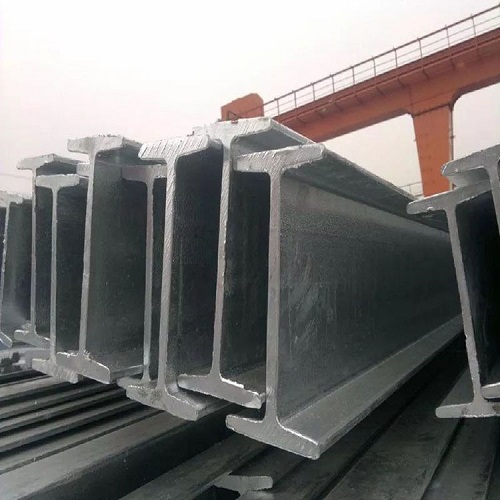
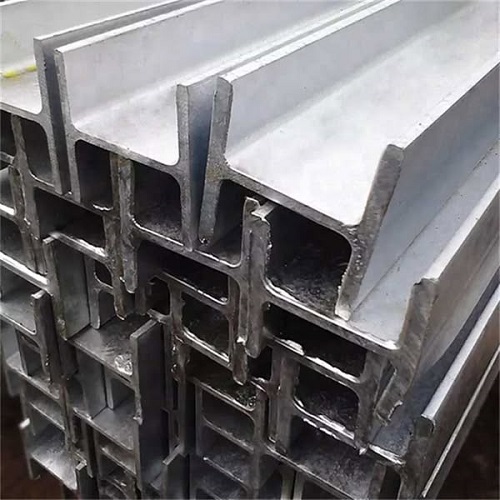
4. Practical Application Scenarios & Engineering Selection Guide
Matching the correct steel beam to project parameters balances structural safety with strict cost containment:
🏗️ When to Choose H-Beam
- High-Rise & Multi-Story Buildings: Wide flanges handle vertical gravity loads and lateral wind/seismic drift simultaneously.
- Load-Bearing Structural Columns: Symmetrical geometry resists compressive buckling across all directional vectors.
- Long-Span Clearances: Capable of spanning unsupported spans exceeding 30 to 100 meters in hangars, sports arenas, and distribution hubs.
- Highway & Railway Bridges: High torsional resistance and fatigue strength endure repetitive dynamic heavy axle loads.
- Heavy Machinery & Marine Foundations: Resists multi-axis vibrational stresses in maritime docks and power plants.
🏡 When to Choose I-Beam
- Residential Houses & Light Framing: Ideal for floor joists, basement ceiling supports, and roof purlins with modest spans (33 to 100 ft).
- Industrial Workshops & Sheds: Highly cost-efficient when loads are purely vertical downward gravity forces.
- Overhead Crane Rails (Monorails): Tapered flanges accommodate standard wheel flanged trolley travel smoothly.
- Secondary Structural Members: Bracing members, lintels, equipment skid sub-frames, and mezzanine floor supports.
- Budget-Constrained Short Spans: Delivers 15% - 20% lower raw material bills when lateral forces are negligible.
5. International Standards & Supply Specifications
When specifying or purchasing H-beams and I-beams for overseas contracts, ensuring compliance with globally recognized metallurgical standards is paramount:
- American Standards (ASTM): ASTM A36 (mild carbon), ASTM A992 (premier standard for structural wide flange shapes with superior yield-to-tensile ratio), ASTM A572 Grade 50 (high-strength low-alloy).
- European Standards (EN): EN 10025 S235JR, S275JR, S355JR / J2 (HEA, HEB, HEM series for H-beams; IPE and IPN series for standard I-beams).
- Japanese Standards (JIS): JIS G3101 SS400, JIS G3106 SM490.
- Stainless Steel Options: Available in AISI 304, 304L, 316, 316L for highly corrosive chemical plants, coastal wharves, and food processing facilities.
Conclusion & Procurement Guidance
In essence, the choice between H-beam and I-beam is an optimization between multi-axis structural capacity and unidirectional cost efficiency. For critical load-bearing columns, large spans, and seismic applications, H-beams are non-negotiable. For short-to-medium horizontal beams with predictable vertical downward loading, I-beams offer an unbeatable cost advantage.
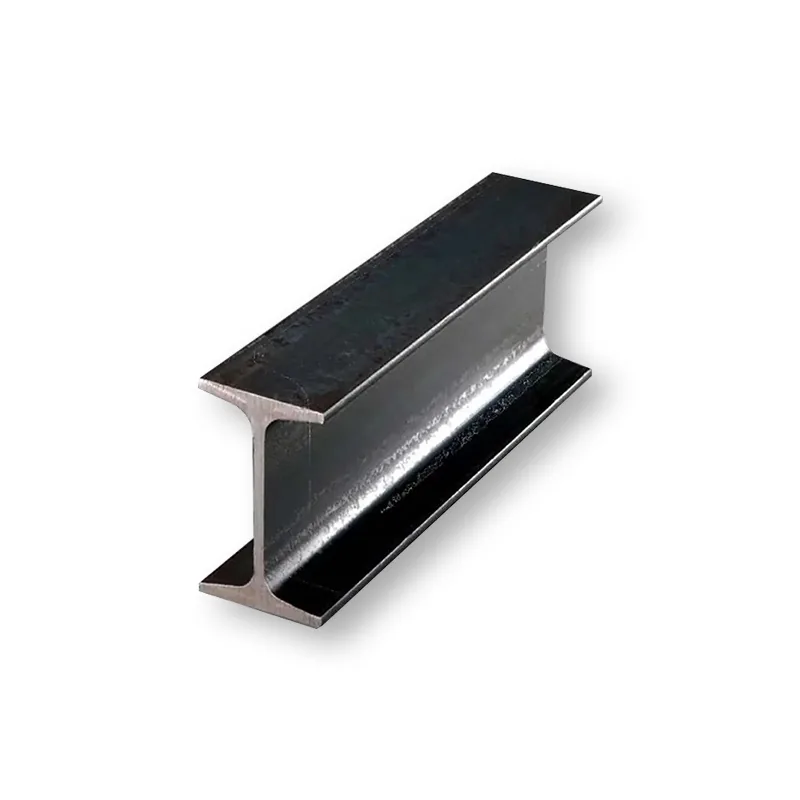
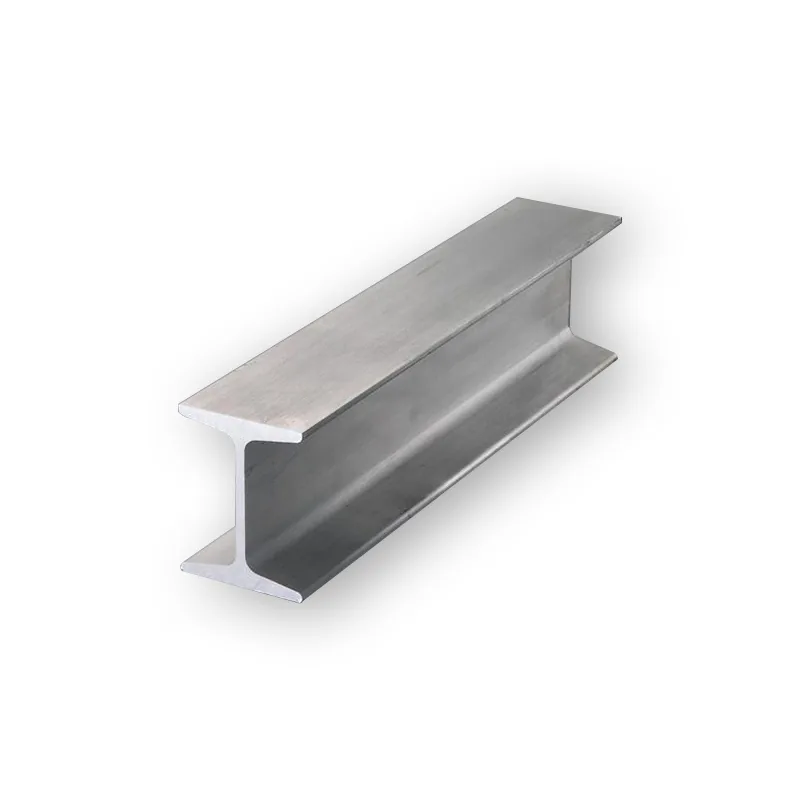
At Ironex China, we maintain comprehensive inventories of Carbon Steel H Steel, Stainless Steel H Steel, Carbon Steel I-Beams, and Stainless Steel I-Beams with full mill test certificates (MTC EN 10204 3.1) and custom cutting/galvanizing services. Contact our engineering sales department today for competitive mill-direct export quotations.
Ironex China Quality Commitment
All steel materials are supplied with authoritative Mill Test Certificates (EN 10204 3.1 / 3.2), full ultrasonic inspection (UT), third-party SGS/BV inspection support, and specialized maritime export packaging.
Featured Steel Materials for This Subject
Need Exact Technical Specs or Fast Pricing?
Contact our metallurgical engineering team for custom thickness, tolerance control, and sea-freight packaging solutions.