
Hot Rolled vs. Cold Rolled Steel Coil: Key Differences in Manufacturing, Properties, Tolerances & Applications
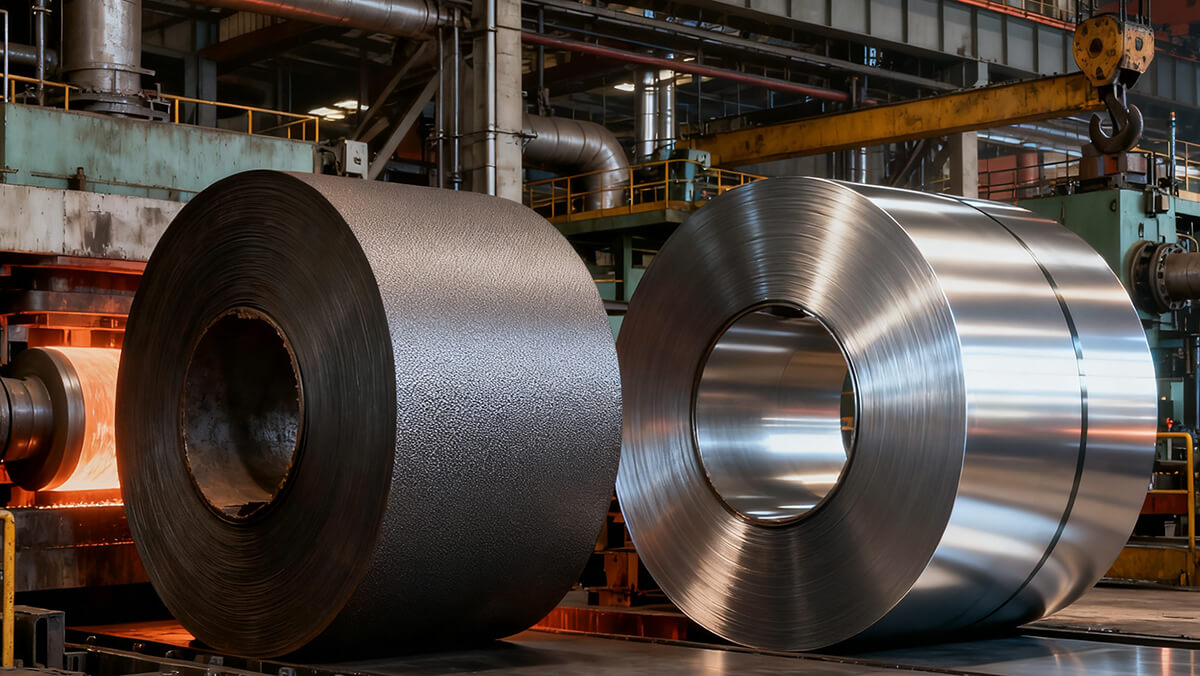
Hot Rolled Coil (HRC) vs. Cold Rolled Coil (CRC): Which Coil Matches Your Specifications?
Hot rolled steel coils are processed at high temperatures above recrystallization (~1,100°C–1,250°C), offering exceptional ductility, minimal internal stress, and superior cost economy for heavy structural, piping, and construction applications. Cold rolled steel coils are cold-reduced at ambient temperatures following acid pickling, achieving 10%–20% higher tensile strength, strict dimensional tolerances (±1%–3%), ultra-thin gauges (down to 0.15 mm), and mirror-smooth surface quality ideal for automotive body panels, household appliances, and precision deep-stamping.
When sourcing flat steel raw materials, procurement engineers and project managers frequently evaluate Hot Rolled Carbon Steel Coils (HRC) and Cold Rolled Steel Coils (CRC). Although both substrates originate from continuous-cast steel slabs, the subsequent thermomechanical processing determines their microstructural grain orientation, yield limits, surface texture, and finished unit costs.
1. Definition & Manufacturing Process: The Recrystallization Divide
The fundamental distinction between hot rolling and cold rolling lies not merely in temperature, but in how deformation affects the internal crystalline lattice of carbon steel:
- Recrystallization Temperature: In metallurgy, recrystallization is the temperature at which deformed, strained grains in the metal crystal lattice are completely replaced by a new set of defect-free, unstrained grains. For commercial structural carbon steel, this thermal threshold is approximately 450°C to 750°C depending on alloy content.
- Hot Rolling Regime: Steel slabs are heated in a walking beam reheat furnace to 1,100°C–1,250°C, well above recrystallization. At this plastic temperature, the steel is pliable and easily shaped with minimal rolling force, enabling continuous dynamic grain restructuring without work hardening.
- Cold Rolling Regime: Takes place well below recrystallization, typically at ambient room temperature. The steel undergoes cold plastic deformation, which distorts the crystalline lattice and significantly increases dislocation density, inducing strain hardening.
Figure 1: Side-by-side metallurgical and visual comparison between Hot Rolled (HR) and Cold Rolled (CR) steel coils
HRC Production Route
- Continuous Casting: Molten carbon steel is cast into continuous solid slabs.
- Reheating Furnace: Slabs are soaked at 1,150°C–1,250°C to dissolve alloy elements uniformly.
- Descaling & Roughing: High-pressure water descaling jets (20+ MPa) strip primary oxide scale before roughing passes.
- Finishing Rolling: Multi-stand finishing mills reduce strip thickness to final gauge (1.2–25 mm).
- Laminar Cooling & Coiling: Water curtains control cooling speed before coiling machines wrap strips into heavy coils up to 30 metric tons.
CRC Production Route
- HRC Substrate Sourcing: Top-tier hot-rolled coils serve as raw feedstock.
- Continuous Acid Pickling: Hydrochloric acid (HCl) baths chemically strip dark iron oxides (mill scale).
- Tandem Cold Rolling: 4-high or 6-high cold mills exert immense mechanical pressure at ambient temperatures to reduce gauge down to 0.15–3.0 mm.
- Hydrogen Annealing (BA/CA): Bell-type or continuous annealing furnaces heat coils to 650°C–720°C under protective atmospheres to relieve internal stresses and restore formability.
- Skin-Pass Temper Rolling: Light rolling pass (0.5%–2% reduction) eliminates yield point elongation (Lüders bands) and imparts desired surface texture.
2. Mechanical Properties: Strength, Ductility & Hardness
The thermal history of steel directly dictates its microscopic grain configuration, yielding distinct mechanical behavior under tension, impact, and forming stresses:
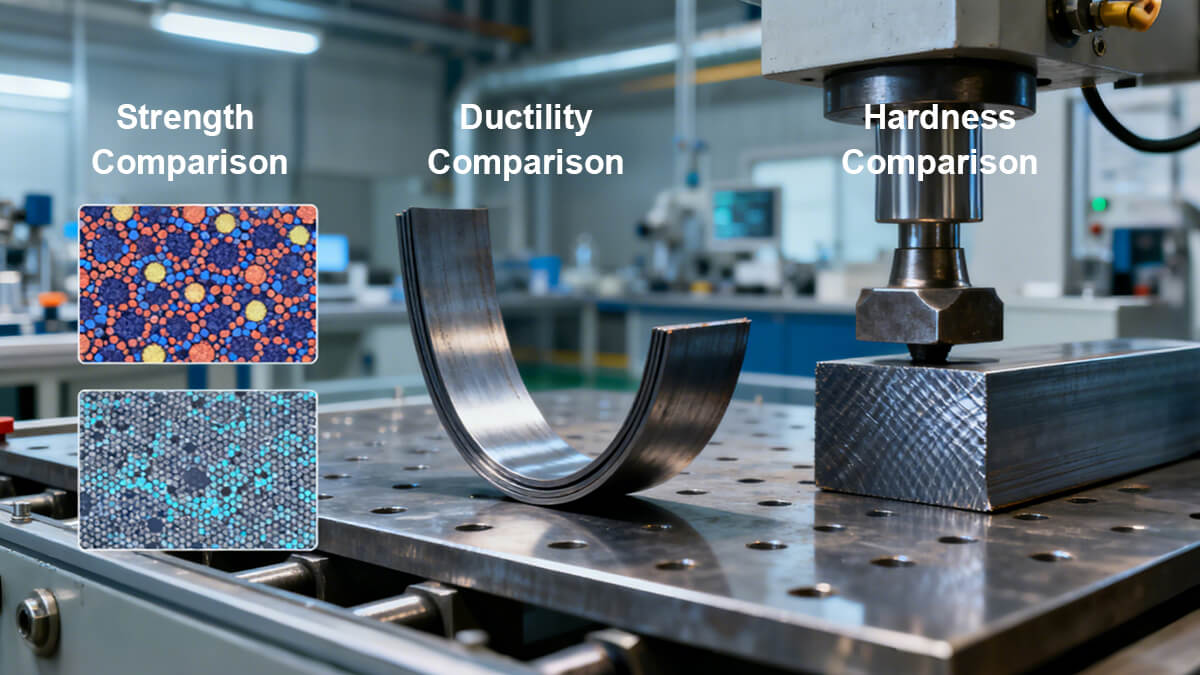
Figure 2: Mechanical property comparison: Work-hardening curves, tensile strengths, and elongation performance
1. Yield & Tensile Strength
Due to work hardening, cold rolled coils generally boast 10% to 20% higher yield and tensile strength than hot rolled coils of identical chemical composition. For instance, cold rolled full hard (CRFH) achieves yield strengths exceeding 550 MPa, whereas standard hot rolled commercial grades exhibit yield strengths around 235–355 MPa.
2. Ductility, Toughness & Elongation
Hot rolled coils feature equiaxed, coarse recrystallized grains with virtually zero internal strain, giving them superior plastic elongation (often >26%–34%) and outstanding impact toughness at low temperatures. Cold rolled coils have reduced ductility unless fully annealed, after which grades like DC04 or SPCE achieve remarkable deep-drawing performance.
3. Hardness & Wear Resistance
Hot rolled steel is relatively soft, typically exhibiting Rockwell hardness ratings around HRB 55–70, making it easy to shear, punch, and weld. Cold rolled steel exhibits elevated surface and core hardness (typically HRB 65–85+ in annealed states, reaching HRB 85–95 in full-hard temper), delivering enhanced resistance to localized abrasive wear.
4. Formability & Residual Stresses
Hot rolling relieves internal stresses spontaneously during natural cooling. In contrast, cold rolling introduces directional residual stresses along the rolling axis. If not properly stress-relieved via annealing, uncoiled strips can exhibit springback or twisting during mechanical stamping and laser cutting operations.
When components require heavy mechanical folding, thick-walled weldability, and resilience against sudden shock loads (e.g., chassis brackets, crane booms), Hot Rolled Coils are the superior engineering choice. When components require precision drawing, dimensional fidelity, or springback control, specify Annealed Cold Rolled Coils (CRCA).
3. Surface Quality, Aesthetics & Dimensional Tolerances
For visible consumer products or high-speed automated assembly lines, surface condition and thickness uniformity are non-negotiable parameters:
Surface Condition & Aesthetics
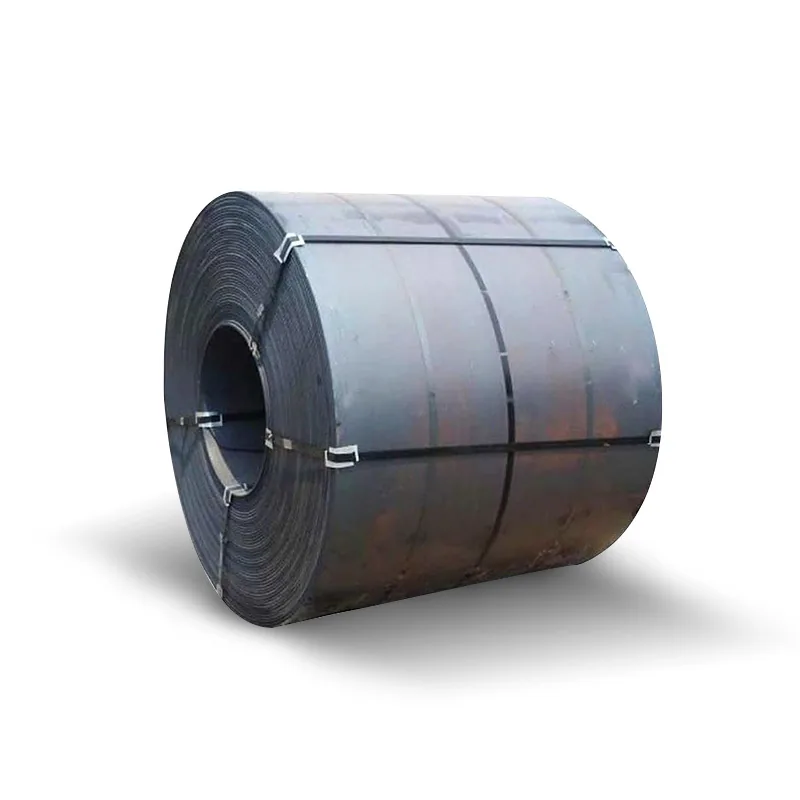
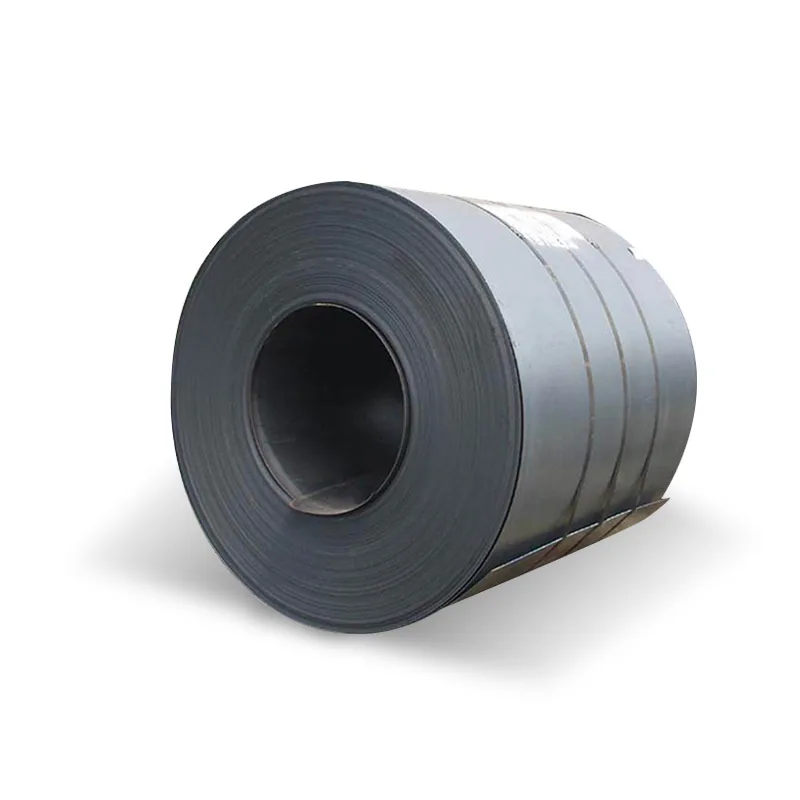
Hot Rolled Coil Surface: As the steel cools from over 1,000°C in atmospheric air, atmospheric oxygen bonds with red-hot iron, forming a rough, non-uniform layer of black/blue iron oxides (wüstite, magnetite, hematite) known as mill scale. The surface is slightly abrasive, matte, and prone to atmospheric rust unless oiled or pickled (HRP&O).
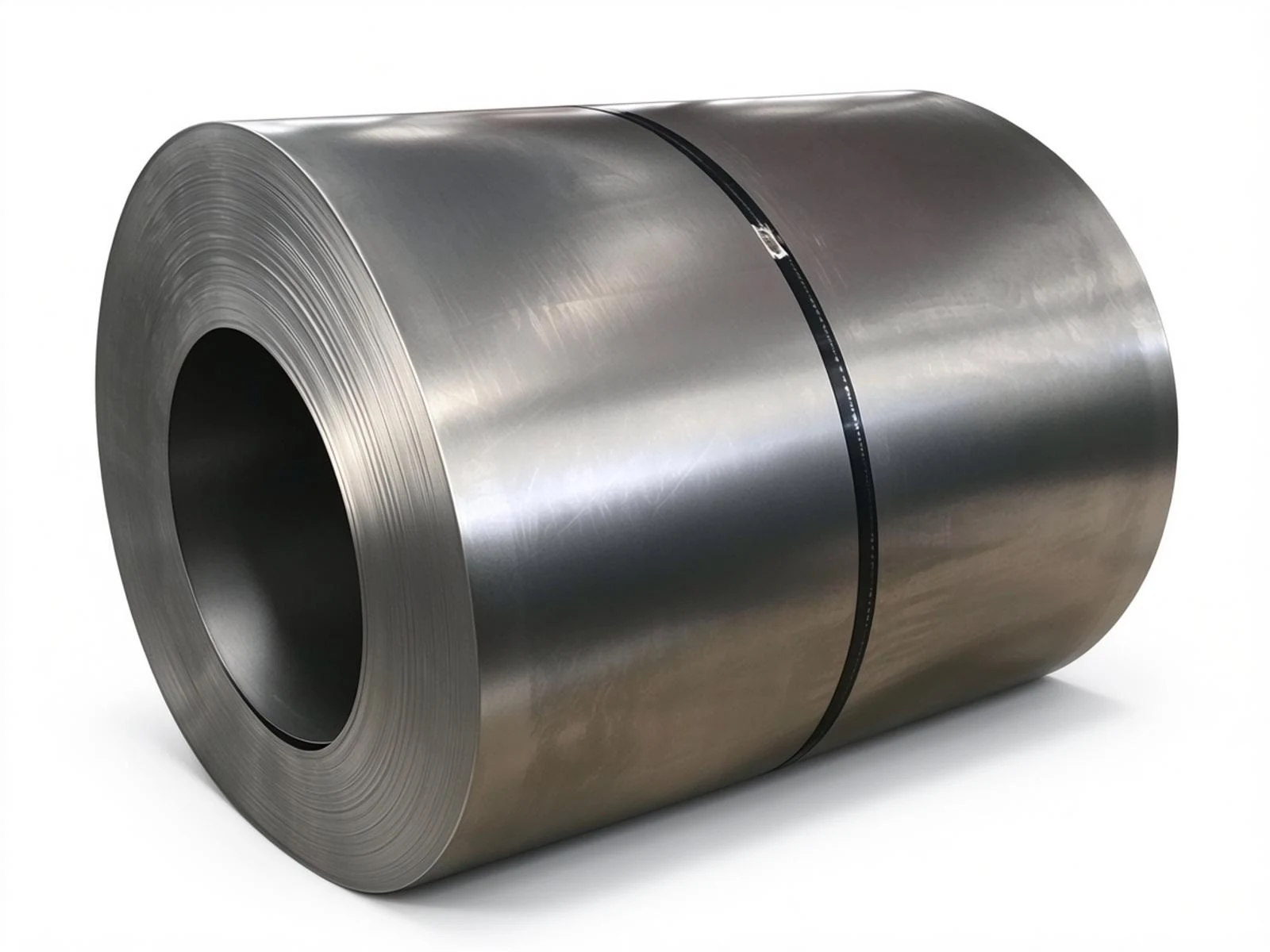
Cold Rolled Coil Surface: Acid pickling removes all traces of mill scale before precision polished cold rolls impart an exceptionally smooth, mirror-like or controlled matte finish (Ra values typically between 0.6 µm and 1.6 µm). This immaculate surface serves as the ideal substrate for high-gloss automotive paints, powder coatings, and electroplating.
Thickness Accuracy & Flatness
Thermal Contraction Variations: In hot rolling, strips cool non-uniformly from edges to center, leading to natural thermal shrinkage deviations. Typical HRC gauge tolerances range within ±5% to ±10%, with slight edge wave or center buckle potential.
Laser-Gauge Precision: Cold mills utilize automatic gauge control (AGC) with X-ray thickness measurement devices operating at high speeds, guaranteeing thickness tolerances within ±1% to ±3%. High-tension levelling ensures edge-to-edge flatness, eliminating binding inside tight stamping dies.
Gauge Capability Comparison:
- Hot Rolled Coils: Minimum commercial gauge is generally restricted to ~1.2 mm to 1.5 mm. Rolling thinner strips while hot causes excessive thermal loss and rapid grain oxidation.
- Cold Rolled Coils: Standard commercial production seamlessly yields ultra-thin sheets from 0.15 mm up to 3.5 mm, essential for battery casings, computer shells, and food container tinplate.
4. Cost Breakdown & Commercial Pricing Differences
Commercial procurement managers understand that production overhead and yield recovery directly impact per-ton invoice totals:
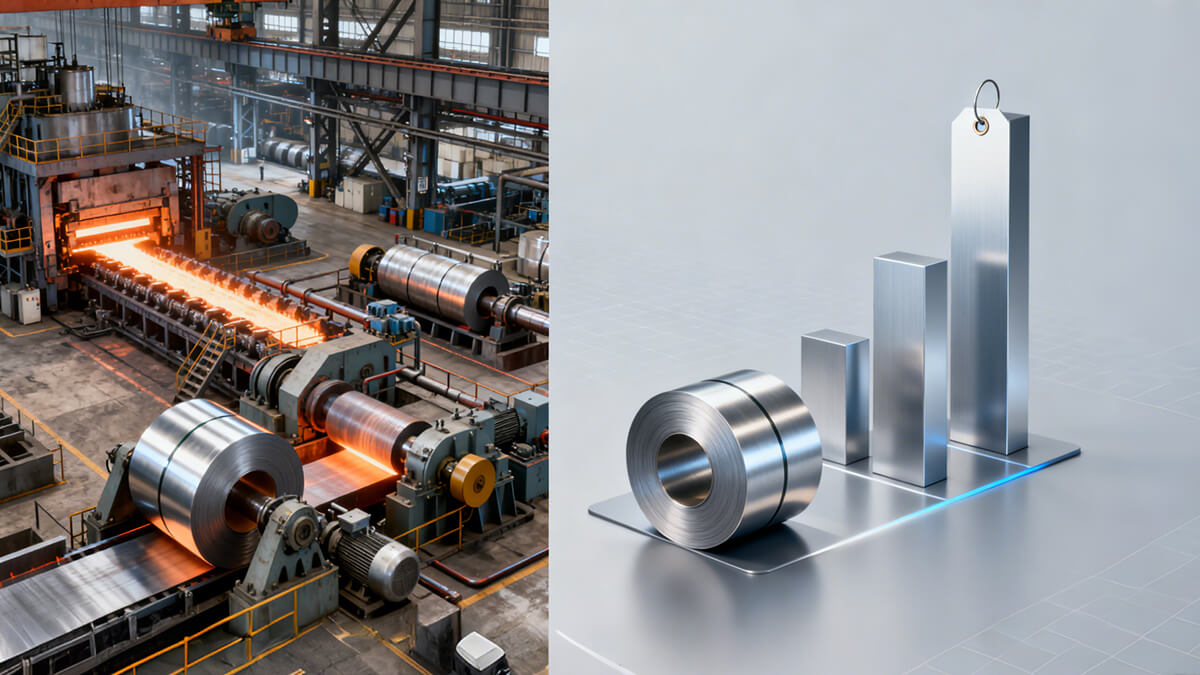
Figure 3: Cost and price dynamics: Energy consumption, process yield, and global market premium comparison
HRC is produced in a single continuous thermomechanical pass from slab to coil. In contrast, CRC requires four secondary industrial operations: acid pickling, multi-stand cold rolling, controlled atmosphere annealing, and skin-pass tempering.
Cold reduction requires high-powered electric motors to deform room-temperature steel. Acid pickling causes 1%–2% iron dissolution loss, while head/tail cropping in cold lines further lowers final metallic yield.
Historically, international FOB export prices for standard commercial cold rolled coil (CRCA DC01 / SPCC) command a $70 to $120 per metric ton premium over basic hot rolled commercial coil (HRC Q235B / A36 / SS400).
5. Application Domains: Where Each Coil Excels
Matching steel coil properties to the functional requirements of your end-use application optimizes product lifecycle performance and eliminates unnecessary material costs:
🏗️ When to Choose Hot Rolled Coils (HRC)
- Structural Steel Beams & Columns: Welded H-beams, box columns, foundation piles, and industrial warehouse framing.
- Energy & Piping Infrastructure: Feedstock for ERW, LSAW, and SSAW welded pipes compliant with API 5L, ASTM A53, and EN 10219.
- Transportation & Heavy Freight: Railroad track bed components, rail car chassis, freight container flooring, and truck frames.
- Agricultural & Mining Machinery: Heavy plow blades, tractor chassis frames, bulldozer attachments, and crushing bins.
- Storage Tanks & Pressure Vessels: Welded bulk liquid fuel tanks, atmospheric silos, and non-critical pressure vessel shells.
🚗 When to Choose Cold Rolled Coils (CRC)
- Automotive Body & Panels: Outer vehicle body panels, door skins, roof decks, floor pans, and fuel tank sub-assemblies.
- White Goods & Household Appliances: Washing machine drums, refrigerator outer shells, microwave enclosures, and HVAC units.
- Precision Stamping & Deep Drawing: Intricate electronic brackets, battery casings, electrical terminal connectors, and metal hardware.
- Metallic Furniture & Enclosures: Filing cabinets, high-voltage electrical switchgear enclosures, server racks, and shelving systems.
- Coating Substrates: Prime base substrate for continuous hot-dip galvanizing (GI), galvalume (GL), and prepainted color coating (PPGI).
6. Advantages & Limitations Summary
Hot Rolled Coil — Key Strengths
- Economical unit purchase price for volume orders
- Superior plastic formability and fracture toughness
- Wide availability in medium and heavy gauges (up to 25mm)
- Negligible internal stresses, reducing pre-heat welding needs
Hot Rolled Coil — Limitations
- Rough surface texture covered with abrasive mill scale
- Looser dimensional tolerances (±5% to ±10%)
- Infeasible for ultra-thin precision gauges (<1.2mm)
Cold Rolled Coil — Key Strengths
- Flawless, silky-smooth metallic surface ready for finish paint
- Extreme gauge precision (±1% to ±3%) with minimal camber
- Enhanced tensile strength and yield hardness
- Available in paper-thin gauges down to 0.15mm
Cold Rolled Coil — Limitations
- Higher procurement cost per metric ton
- Lower ductility in unannealed (full hard) states
- Requires anti-rust oiling and climate-controlled seaworthy storage
7. International Standards & Steel Grades Reference
When issuing purchase inquiries or reviewing Mill Test Certificates (MTC EN 10204 3.1), cross-referencing major international engineering standards is critical:
| Standard Body | Hot Rolled Steel Coil (HRC) Grades | Cold Rolled Steel Coil (CRC) Grades |
|---|---|---|
| ASTM (USA) | ASTM A36, ASTM A1011 CS/SS, ASTM A572 Gr.50 | ASTM A1008 CS Type A/B/C, DS, DDS, EDDS; SAE 1008 |
| EN (Europe) | EN 10025-2 S235JR, S275JR, S355JR; EN 10149-2 S500MC | EN 10130 DC01, DC03, DC04, DC05, DC06; EN 10268 HC260LA |
| JIS (Japan) | JIS G3101 SS400, JIS G3131 SPHC, SPHD, SPHE | JIS G3141 SPCC (Commercial), SPCD (Drawing), SPCE (Deep Drawing) |
| GB/T (China) | GB/T 700 Q235B, GB/T 1591 Q355B, Q420B; QStE380TM | GB/T 5213 St12, DC01, Q195, Q215, SPCC |
8. Conclusion & Direct Mill Export Sourcing from Ironex China
In summary, the decision between hot rolled and cold rolled steel coil hinges upon your project's balance between mechanical structural duty vs. cosmetic dimensional precision. When manufacturing large-scale structural frames, pipelines, agricultural implements, and industrial platforms, hot rolled coils deliver uncompromised strength and optimal cost efficiency. When fabricating smooth car body shells, domestic appliance enclosures, electrical control panels, and thin stamped components, cold rolled coils provide the indispensable surface finish and tight tolerances needed for zero-defect production.
Partner with Ironex for Global Steel Coil Fulfillment
At Ironex China, we operate advanced coil decoiling, slitting, transverse leveling, and anti-rust packaging lines with direct mill partnerships across China's tier-one steel producers (HBIS, Baosteel, Shougang, Shagang). We supply:
- Prime Hot Rolled Coils (HRC / HRP&O): Thickness 1.2 mm – 25.0 mm, Width 600 mm – 2,000 mm, Grades Q235B, Q355B, SS400, A36, SPHC, S235JR.
- Precision Cold Rolled Coils (CRCA / CRFH): Thickness 0.15 mm – 3.5 mm, Width 600 mm – 1,500 mm, Grades SPCC, SPCD, SPCE, DC01-DC06, SAE 1008, Full Hard.
- Strict Quality Assurance: 100% Mill Test Certification (MTC EN 10204 3.1) and full support for third-party inspection (SGS, BV, Intertek, Lloyds).
- Export Seaworthy Packaging: Fully oiled, wrapped with waterproof anti-corrosion VCI paper, protective metal corner angles, galvanized steel strapping, and sturdy wooden pallet eye-to-sky / eye-to-wall options.
Ironex China Quality Commitment
All steel materials are supplied with authoritative Mill Test Certificates (EN 10204 3.1 / 3.2), full ultrasonic inspection (UT), third-party SGS/BV inspection support, and specialized maritime export packaging.
Featured Steel Materials for This Subject
Need Exact Technical Specs or Fast Pricing?
Contact our metallurgical engineering team for custom thickness, tolerance control, and sea-freight packaging solutions.