ASTM A36 vs. A572 Gr. 50 Steel Plate: Chemical Composition, Mechanical Properties & Global Equivalents (Q235B, S235JR, SS400)
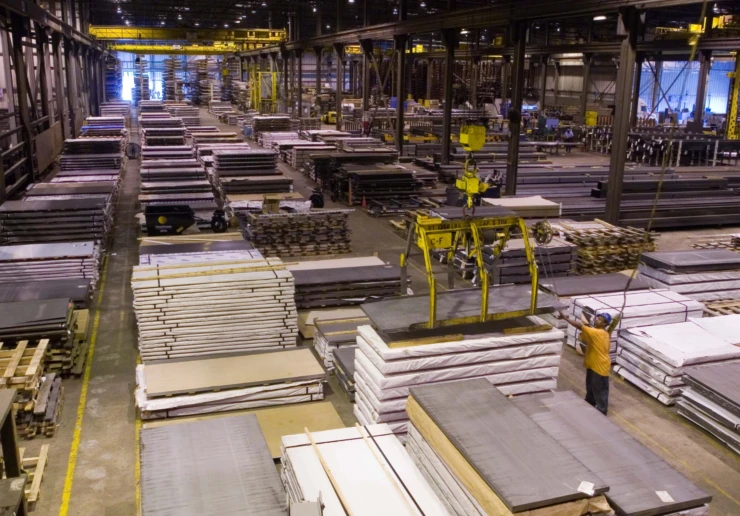
ASTM A36 Mild Steel (250 MPa Yield, Easy Fabrication) vs. ASTM A572 Gr. 50 HSLA Plate (345 MPa Yield, 20%+ Dead-Weight Reduction)
ASTM A36 (and its global counterparts Q235B, S235JR, SS400) is a low-carbon mild steel plate featuring a 250 MPa (36 ksi) yield strength, exceptional ductility, forgiving weldability without mandatory preheating in standard thicknesses, and the lowest base cost per ton—making it ideal for stiffness-governed base plates, storage tanks, and general weldments. ASTM A572 Grade 50 (aligned with Q355B, S355JR/J2, SM490) is a columbium-vanadium micro-alloyed HSLA plate delivering a 345 MPa (50 ksi) yield strength, enabling structural designers to reduce plate thickness and overall steel tonnage by 18% to 25% in high-load bridges, crane booms, transmission towers, and high-rise mega-columns.
For international EPC contractors, steel fabricators, and industrial wholesalers, selecting the right flat rolled carbon steel specification directly impacts structural safety factors, welding productivity, ocean freight dead-weight, and total landed project budget. At Ironex China, our technical sales engineers process thousands of metric tons of Hot Rolled Mild Steel Plates (Q235B / A36 / SS400), ASTM A36 / S235JR Structural Plates, and ASTM A572 Gr. 50 / S355JR High-Strength Plates every month. This engineering guide breaks down the exact metallurgical, mechanical, and standard cross-reference criteria you need before issuing your next Bill of Quantities (BOQ).
1. Chemical Composition & Metallurgical Strengthening Mechanisms
To understand why ASTM A572 Grade 50 achieves a 38% increase in yield point over ASTM A36 without sacrificing weldability, engineers must examine their underlying alloy chemistry and grain refinement mechanisms:
- Solid-Solution Strengthening in ASTM A36 (C-Mn System): ASTM A36 relies primarily on carbon (0.25%–0.29% max depending on thickness) and manganese (0.80%–1.20% for plates over 20 mm) to achieve its 250 MPa yield point. Its microstructure consists of coarse-to-medium equiaxed ferrite grains and pearlite colonies formed during conventional hot rolling above the recrystallization temperature.
- Precipitation Hardening & Grain Refinement in ASTM A572 Gr. 50 (HSLA System): Rather than elevating carbon content—which would cause martensitic cracking in the weld Heat-Affected Zone (HAZ)—ASTM A572 Gr. 50 limits carbon to 0.23% max and introduces trace micro-alloying elements: Columbium/Niobium (Nb: 0.005%–0.05%) and Vanadium (V: 0.01%–0.15%). During Thermo-Mechanical Controlled Processing (TMCP) or normalizing rolling, fine carbonitride precipitates (Nb(C,N) and V(C,N)) pin austenite grain boundaries, producing an ultra-fine polygonal ferrite grain structure. Under the Hall-Petch relationship, smaller grain size simultaneously increases both yield strength and low-temperature notch toughness.
| Standard & Steel Grade | C (Max %) | Si (Max %) | Mn (%) | P / S (Max %) | Micro-Alloys & Deoxidation |
|---|---|---|---|---|---|
| ASTM A36 (t ≤ 20 mm) | 0.25 | 0.40 | Not specified (0.80–1.20 for t > 20mm) | P ≤ 0.040 / S ≤ 0.050 | Cu ≥ 0.20% (when specified for corrosion) |
| GB/T 700 Q235B | 0.20 | 0.35 | ≤ 1.40 | P ≤ 0.045 / S ≤ 0.045 | Killed or Semi-killed low-carbon mild steel |
| EN 10025-2 S235JR | 0.17 (t ≤ 40mm) | — | ≤ 1.40 | P ≤ 0.035 / S ≤ 0.035 | N ≤ 0.012%; Cu ≤ 0.55%; strict European purity |
| JIS G3101 SS400 | Not fixed* | Not fixed* | Not fixed* | P ≤ 0.050 / S ≤ 0.050 | *Governed by tensile (400–510 MPa); mills supply C ≤ 0.20% |
| ASTM A572 Grade 50 | 0.23 | 0.40 | ≤ 1.35 | P ≤ 0.040 / S ≤ 0.050 | Nb (0.005–0.05%), V (0.01–0.15%), Type 1–3 HSLA |
| EN 10025-2 S355JR / J2 | 0.24 / 0.20 | 0.55 | ≤ 1.60 | P ≤ 0.035 / S ≤ 0.035 (J2: 0.025) | Fully Al-killed (Al ≥ 0.02% for J2); CEV ≤ 0.45–0.47% |
Dual & Triple-Certified Carbon Steel Plates (ASTM + EN + GB/T)
To streamline international customs clearance and third-party engineering audits, Ironex China supplies hot rolled plates melted to strict overlapping chemical and mechanical windows. Our ASTM A36 / S235JR / Q235B mild steel plates and ASTM A572 Gr. 50 / S355JR / Q355B high-strength plates are delivered with ultra-low sulfur and phosphorus levels (P ≤ 0.025%, S ≤ 0.015%) from Basic Oxygen Furnace (BOF) + LF vacuum ladle refining mills, accompanied by full EN 10204 3.1 / 3.2 Mill Test Certificates.
2. Mechanical Properties, Impact Toughness & Heavy Plate Thickness Derating
A frequent pitfall in heavy plate procurement (thicknesses from 40 mm up to 200 mm) is overlooking the metallurgical thickness derating effect. As plate thickness increases, the core of the slab cools more slowly during hot rolling, resulting in coarser ferrite grains and a gradual reduction in minimum guaranteed yield strength.
- Yield Strength Stability Across Gauge: Under ASTM standards, ASTM A36 maintains a flat minimum yield specification of 250 MPa (36 ksi) all the way up to 200 mm (8 inches), dropping to 220 MPa (32 ksi) only above 200 mm. By contrast, European EN 10025-2 (S235JR / S355JR) and Chinese GB/T 700 / GB/T 1591 standards apply progressive step-downs at 16 mm, 40 mm, 63 mm, 80 mm, 100 mm, and 150 mm. For example, S355JR guarantees 355 MPa up to 16 mm, 345 MPa from 16–40 mm, 335 MPa from 40–63 mm, and 315 MPa from 80–100 mm.
- Charpy V-Notch (CVN) Impact Toughness: Standard ASTM A36 and ASTM A572 Gr. 50 do not mandate Charpy V-Notch impact testing unless Supplemental Requirement S5 is specified in the purchase order. Conversely, European and Chinese equivalents encode impact energy directly into the grade designation: JR / Grade B requires ≥ 27 Joules at +20°C; J0 / Grade C requires ≥ 27 J at 0°C; and J2 / Grade D requires ≥ 27 J at -20°C (essential for sub-zero bridges, offshore cranes, and cold-climate mining structures).
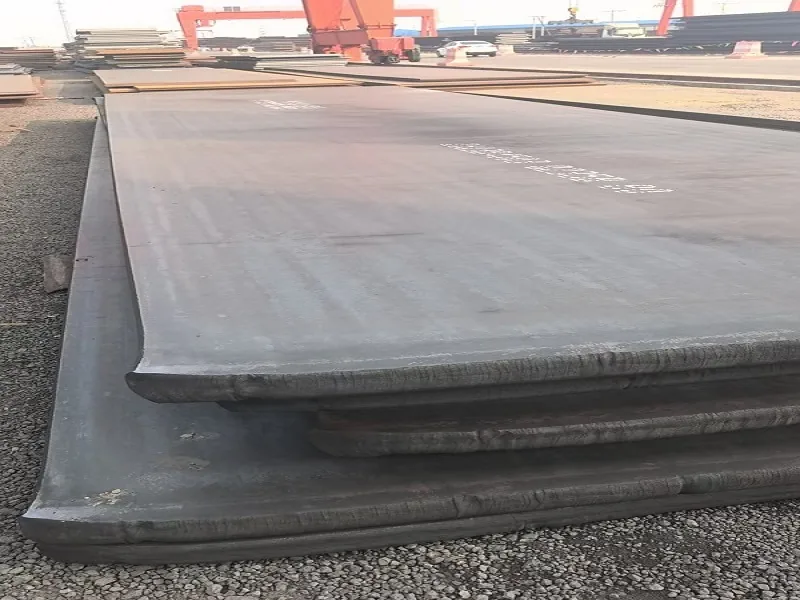
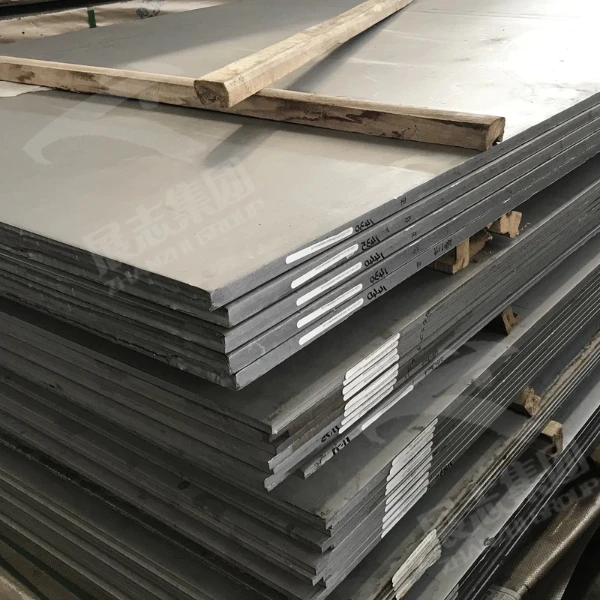
Figure 1: Heavy-gauge hot-rolled structural carbon steel plates (ASTM A36 / A572 Gr. 50) staged with heat number stenciling and ultrasonic inspection verification
3. Global Carbon Steel Plate Equivalency Cross-Reference Guide (ASTM, EN, GB, JIS, DIN)
When international engineering blueprints specify local standards, procurement officers must understand how American, European, Chinese, and Japanese structural steel plates align—and where subtle technical divergences exist:
Mild Structural Steel Class (235–250 MPa Yield)
- USA (ASTM): ASTM A36 / A36M (Fy ≥ 250 MPa, Fu: 400–550 MPa)
- China (GB/T 700): Q235B (Fy ≥ 235 MPa, Fu: 370–500 MPa, 20°C AKV ≥ 27J)
- Europe (EN 10025-2): S235JR (1.0038) / S235J0 / S235J2
- Japan (JIS G3101): SS400 (Fy ≥ 245 MPa for t ≤ 16mm, Fu: 400–510 MPa)
- Germany (DIN 17100): St37-2 / RSt37-2
Substitution Caution: JIS SS400 does not mandate maximum Carbon or Manganese limits in the base standard. For welded structures requiring ASTM A36 or EN S235JR compliance, always request mill heats with C ≤ 0.20% and CEV ≤ 0.40%.
High-Strength Low-Alloy Class (345–355 MPa Yield)
- USA (ASTM): ASTM A572 Grade 50 (Fy ≥ 345 MPa, Fu ≥ 450 MPa)
- China (GB/T 1591): Q355B / Q355D (formerly Q345B; Fy ≥ 355 MPa, Fu: 470–630 MPa)
- Europe (EN 10025-2): S355JR (1.0045) / S355J2 (1.0577)
- Japan (JIS G3106): SM490A / SM490B / SM490YA (Welded structure grade)
- Germany (DIN 17100): St52-3
Substitution Highlight: China's updated GB/T 1591-2018 upgraded Q345B to Q355B (min yield 355 MPa), making it fully compatible with both European EN 10025-2 S355JR and American ASTM A572 Gr. 50.
4. Weldability, Carbon Equivalent (CEV) & Heavy Plate Z-Direction Testing
In heavy structural steel fabrication—such as box girders, offshore jacket nodes, and crane pedestals—weldability and resistance to hydrogen-induced cold cracking are governed by the International Institute of Welding (IIW) Carbon Equivalent Value (CEV):
- ASTM A36 / Q235B / S235JR Weldability: Typical mill CEV ranges between 0.30% and 0.36%. Plates under 25 mm can be welded rapidly via SMAW, GMAW (MIG), FCAW, or SAW without preheating under normal ambient temperatures (> 10°C).
- ASTM A572 Gr. 50 / Q355B / S355JR Weldability: Typical mill CEV ranges between 0.38% and 0.44%. For plate thicknesses exceeding 32 mm (1.25 inches) or highly restrained multi-pass T-joints, preheating to 65°C – 120°C (150°F – 250°F) per AWS D1.1 Structural Welding Code is recommended, paired with low-hydrogen electrodes (AWS A5.1 E7018-H4R) to prevent delayed toe or root cracking.
- Through-Thickness Z-Direction Properties (Z15 / Z25 / Z35): When heavy plates (> 40 mm) are welded in cruciform or T-joint configurations subject to tensile stress perpendicular to the rolling surface, microscopic manganese sulfide (MnS) inclusions can trigger lamellar tearing. For critical nodes, Ironex supplies calcium-treated, vacuum-degassed heavy plates tested to ASTM A770 / EN 10164 Z25 or Z35 (guaranteeing ≥ 25% or ≥ 35% reduction of area in through-thickness tensile tests) along with 100% Ultrasonic Testing (ASTM A435 / A578 Level B or EN 10160 S2E2).
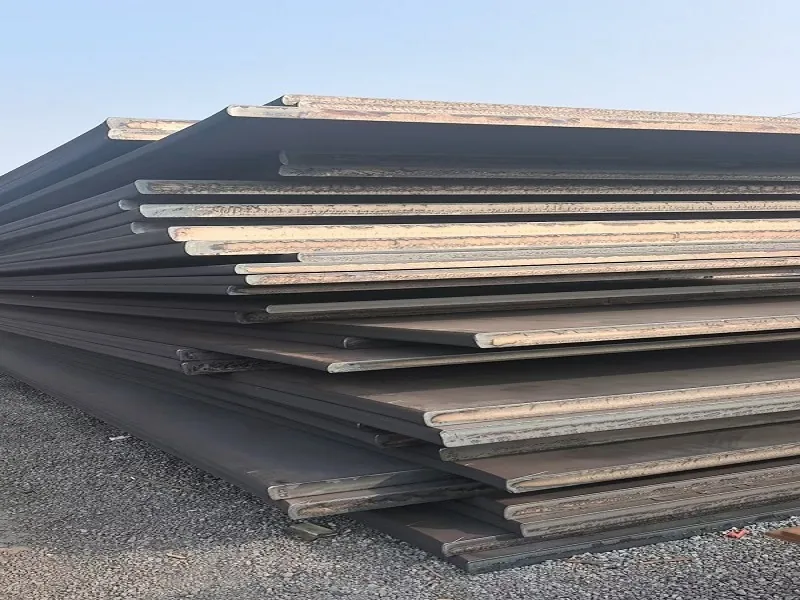
Figure 2: Precision flame-cut heavy carbon steel plates (thickness 25 mm – 120 mm) ready for beveling and ultrasonic flaw inspection
One-Stop CNC Flame/Plasma Cutting, Shot Blasting & Shop Primer Painting
Why ship scrap weight across the ocean? Ironex China operates heavy-duty CNC gantry flame, high-definition plasma, and 30kW fiber laser cutting lines directly adjacent to our port warehouses. We supply custom CAD-nested profile cutting, V/X/K weld edge beveling, CNC drilling, Sa 2.5 shot blasting (ISO 8501-1), and inorganic zinc silicate shop primer coating (15–25 μm). Your fabricated plate parts arrive at your job site corrosion-free and ready for immediate assembly.
5. Structural Cost Optimization: Which Steel Plate Should You Buy?
When finalizing your steel plate procurement strategy, apply this engineering rule of thumb:
- Choose ASTM A36 / Q235B / S235JR / SS400 when: Your design is governed by plate thickness rigidity, vibration damping, or minimum code wall thickness (such as machinery baseplates, non-pressurized storage tanks, chutes, stair stringers, and general cold-bent brackets), or when field welding is performed under variable conditions where ultra-forgiving low-carbon weldability is paramount.
- Choose ASTM A572 Gr. 50 / Q355B / S355JR / S355J2 when: Your structure carries high axial tension, bending moments, or dynamic live loads (such as highway bridge girders, high-rise building columns, portal frame rafters, excavator booms, and offshore skids). Although A572 Gr. 50 carries a modest 6%–12% mill price premium per metric ton over A36, its 38% higher yield strength allows a 18% to 25% reduction in total steel tonnage—slashing raw material cost, welding consumable volume, foundation loads, and ocean container/breakbulk freight expenses.
Get Mill-Direct Carbon & HSLA Steel Plate Quotes from Ironex China
With over 80,000 metric tons of standing inventory in thicknesses from 1.5 mm to 200 mm and widths up to 3,500 mm, Ironex China delivers certified ASTM A36, ASTM A572 Gr. 50, EN 10025 S235JR/S355J2, GB/T Q235B/Q355B, and JIS SS400/SM490 plates worldwide. Every shipment includes full EN 10204 3.1 MTCs and optional SGS / BV / Lloyd's third-party witness inspection.
Ironex China Quality Commitment
All steel materials are supplied with authoritative Mill Test Certificates (EN 10204 3.1 / 3.2), full ultrasonic inspection (UT), third-party SGS/BV inspection support, and specialized maritime export packaging.
Featured Steel Materials for This Subject
Need Exact Technical Specs or Fast Pricing?
Contact our metallurgical engineering team for custom thickness, tolerance control, and sea-freight packaging solutions.